Recipes, Tales and the Journey of a Vegetarian


Tuesday, March 8, 2011

Challenge! Go vegetarian 1 day a week - Week 5!

How's it going out there veg heads?!  How have the past few weeks been?  We're almost half way thru this challenge.....are you still with me??  If so, I've got some delicious recipes for you!! 

Quinoa Crunch w/Yogurt

-1 C Quinoa (uncooked, rinsed well & drained)
-1/4 C Whole Flaxseed
-1 TBSP Honey (To make it vegan, use Agave      nectar)
-1 TBSP Olive Oil
-1TBSP Cinnamon

Directions

1. Mix all ingredients together.
2. Spread on a baking sheet and bake at 375 deg. F oven until lightly browned. (You might stir every 10 minutes for about 25 - 30 minutes.)
3. Let cool, crumble.

MAKES EIGHT 2 Tbsp SERVINGS.  Keeps for one week in a air tight container.

Suggested serving: add 2 Tbsp of topping to 1/2 cup nonfat Greek/Soy yogurt, along with fresh berries. Drizzle honey on top.

Number of Servings: 8

APPLE PEANUT SPINACH SALAD
(Ok, the flavors in this sound "out there" but, together, it makes the most delicious, complex tasting salad.  Perfect for company!)

Ingredients

  • 2 (6 ounce) packages fresh baby spinach
  • 1 medium apple, chopped
  • 1/4 cup raisins
  • 2 tablespoons chopped peanuts (you can sub pecans)
  • 2 tablespoons olive oil
  • 1 tablespoon sugar
  • 1 tablespoon cider vinegar
  • 1 tablespoon chutney
  • 3/4 teaspoon curry powder
  • 1/4 teaspoon salt

Directions

  1. In a large bowl, combine the spinach, apple, raisins and peanuts. In a jar with a tight-fitting lid, combine the remaining ingredients; shake well. Drizzle over salad and toss to coat. Yum!
One serving (3/4 cup) equals 205 calories, 12 g fat (2 g saturated fat), 0 cholesterol, 245 mg sodium, 23 g carbohydrate, 2 g fiber, 4 g protein. 
BLACK BEAN BURGERS

Ingredients
  • 1 (16 ounce) can black beans, drained and rinsed
  • 1/2 green bell pepper, cut into 2 inch pieces
  • 1/2 onion, cut into wedges
  • 3 cloves garlic, peeled
  • 1 egg
  • 1 tablespoon chili powder
  • 1 tablespoon cumin
  • 1 teaspoon Thai chili sauce or hot sauce (I left this out as I don't like spicy food)
  • 1/2 cup bread crumbs

Directions

  1. If grilling, preheat an outdoor grill for high heat, and lightly oil a sheet of aluminum foil. If baking, preheat oven to 375 degrees F (190 degrees C), and lightly oil a baking sheet.
  2. In a medium bowl, mash black beans with a fork until thick and pasty.
  3. In a food processor, finely chop bell pepper, onion, and garlic. Then stir into mashed beans.
  4. In a small bowl, stir together egg, chili powder, cumin, and chili sauce.
  5. Stir the egg mixture into the mashed beans. Mix in bread crumbs until the mixture is sticky and holds together. Divide mixture into four patties.
  6. If grilling, place patties on foil, and grill about 8 minutes on each side. If baking, place patties on baking sheet, and bake about 10 minutes on each side.
One sandwich equals 268 calories, 3 g fat (5 g saturated fat), 20 mg cholesterol, 475 mg sodium, 32 g carbohydrate, 8 g fiber, 20 g protein. *Using a 100 calorie bun*

Tuesday, February 15, 2011

Challenge! Go vegetarian 1 day a week - Week 2!

How's it going out there "once a week veggie heads??"  Have you had any trouble sticking to the challenge? Is it easier than you thought? Have you tried any of the recipes on here or any *new* recipes?   Drop me a comment & let me know!  I'd love to hear how it's going!!

Miss week one of the challenge? It's NEVER to late to start!!!  Let me know you're on board and begin this week!!!  For all that *honestly* participate (and I'm relying on good faith here) I will send you a special Lotions & Potions lip balm once the 12 weeks is over!  For those of you that have already started the challenge, this includes you!!

Ok, as promised, here is one days' worth of recipes for week 2 to give you some ideas of what to make and keep the yumminess alive!!!


VEGAN PUMPKIN OATMEAL
Serves 1 

Ingredients
  • 1/2 cup old-fashioned rolled oats
  • 1 cup almond milk (regular milk would work too)
  • 1/4 cup canned pumpkin puree
  • 3 dashes ground cinnamon
  • 1 tablespoon chopped walnuts
  • 1/2 teaspoon honey


Directions

  1. Stir the oats, soy milk, pumpkin puree, and cinnamon together in a saucepan; bring to a gentle boil. Reduce heat to low and simmer 5 minutes, or until the oatmeal reaches your desired consistency. Transfer to serving bowl. Garnish with walnuts and honey.

Nutritional Information 

Amount Per Serving  Calories: 113 | Total Fat: 5.4g | Cholesterol: 0mg | Fiber: 5.6 g

 
EGGPLANT &  PEPPER PARMESAN SANDWICHES
Serves 4

Ingredients

  • 1 eggplant, seeded and cut lengthwise into 1/4 inch slices
  • 1 red bell pepper, sliced into thin strips
  • salt and pepper to taste
  • 1 French baguette (I use whole wheat)
  • 2 ounces soft goat cheese
  • 1/4 cup tapenade (olive spread)
  • 1/4 cup grated Parmesan cheese

Directions

  1. Preheat the oven broiler.
  2. Place the eggplant and red bell pepper on a medium baking sheet, and season with salt and pepper. Broil 5 to 10 minutes, until tender and slightly browned.
  3. Cut baguette in half lengthwise. Spread bottom half with goat cheese, followed by tapenade. Layer with eggplant and red pepper, then sprinkle with Parmesan cheese. Cover with top half of baguette. Cut into 4 pieces. Serve hot or cold


Amount Per Serving  Calories: 461 | Total Fat: 9.6g | Cholesterol: 13mg | Fiber: 8.2 g


 VEGETARIAN KORMA
Serves 4

Ingredients

  • 1 1/2 tablespoons vegetable oil
  • 1 small onion, diced
  • 1 teaspoon minced fresh ginger root
  • 4 cloves garlic, minced
  • 2 potatoes, cubed
  • 4 carrots, cubed
  • 1 fresh jalapeno pepper, seeded and sliced
  • 3 tablespoons ground unsalted cashews
  • 1 (4 ounce) can tomato sauce
  • 2 teaspoons salt
  • 1 1/2 tablespoons curry powder
  • 1 cup frozen green peas
  • 1/2 green bell pepper, chopped
  • 1/2 red bell pepper, chopped
  • 1-2 cups vegetable stock (depending on how fast your potatoes cook)
  • 1 cup heavy cream (I use light coconut milk. Not only does it make this dish vegan, it drastically cuts down on fat & calories.  But for a super creamy sauce, stick with the cream.)
  • 1 bunch fresh cilantro for garnish

Directions

  1. Heat the oil in a skillet over medium heat. Stir in the onion, and cook until tender. Mix in ginger and garlic, and continue cooking 1 minute. Mix potatoes, carrots, jalapeno, cashews, and tomato sauce. Season with salt and curry powder. Cook and stir 20 minutes, or until potatoes are tender.  You may need to add some vegetable stock to prevent the mixture from burning.  Add 1/2 cup at a time and let absorb fully before adding more.
  2. Stir peas, green bell pepper, red bell pepper, and cream or coconut milk into the skillet. Reduce heat to low, cover, and simmer 10 minutes. Garnish with cilantro to serve.

Nutritional Information 

Amount Per Serving w/CREAM  Calories: 462 | Total Fat: 31.1g  | Cholesterol: 82mg
-Also higher in fat/calories because of cashews which are full of GOOD fats.

Amount Per Serving w/low fat COCONUT MILK  Calories: 292 | Total Fat: 11.7g  | Cholesterol: 82mg
-Higher in fat/calories because of cashews which are full of GOOD fats.

Wednesday, February 9, 2011

Challenge!! Go vegetarian once a week....

Recently, my partner decided to go back to the "sauce" and eat meat again.  I have to give her major props for cutting out meat for 10 months.  That's amazing - especially since this whole journey came to life under the premise that it was a "30 Day Trial" for her.  I always say even just going "veggie" one day a week can have a dramatic effect on a variety of social and environmental issues we face today.

The average American consumes around 250 pounds of meat a year.  250 LBS!!  It can be a tall order to go veggie full time but by adjusting your diet to include a non-meat day once a week, you will reduce your consumption of meat by about 35 pounds a year - that's huge!!  And it's easy!  Have pancakes for breakfast; a salad for lunch and spaghetti for dinner.  Easy as pie. I've listed some yummy recipes below to get you started.   Below the recipes are some other effects you will see from going veggie once a week........

Water
Save 84,000 gallons of water – animals and animal agriculture consume a lot of water. Consider that it takes 2,400 gallons of water to make one pound of beef. Other animals such as chickens and pigs consume less water than cattle, but their consumption is still pretty high given the sheer numbers of animals used for food.

Grain
Save 245 pounds of grain– It takes seven pounds of grain to produce one pound of beef, and almost as much for both chickens and pigs. That amount of grain can feed an individual in some developing nations for six months or more. A full 1/3 of the world’s grain output is used to feed livestock.

Land
Save 7,700 sq feet of rain forest – Millions of acres of land (many of which were once rainforest) are used for livestock grazing and to grow crops that feed these animals. The amount of land saved by going veg one day a week is equivalent to four good sized homes. 

Animal Welfare
Save a few of the over 10 billion animals slaughtered for food – This is how many land animals are killed each year in the US alone. The majority of these animals have no laws to protect them from abuse and cruelty. They spend their entire lives suffering in inhumane conditions and mistreatment. 

Fossil Fuels
Save 15.5 gallons of gasoline – Conventional farming methods use petrochemical (oil based) fertilizers and pesticides for crops. Fuel is also used to transport and refrigerate meat and crops. By going veg one day a week, you’ll save over 15 gallons of gasoline. At today’s prices…that’s around $65 for the “cheap” stuff.

Animal Waste
Reduce over 400 pounds of manure produced by food animals
– What can I say?  Animals poop a lot. Millions of tons of waste is produced by livestock each year. For example, pig farmers around the country build “lagoons” to hold all of the poop. When the lagoons get too full they break open spilling toxic pig waste into rivers, streams and protected land. Disgusting!!!

Global Warming
Reduce your contribution to global warming – Emissions from animal agriculture contributes to more greenhouses gases than all the cars and trucks on the planet COMBINED. 

Topsoil Erosion
Save 87 square feet of topsoil from erosion – Food crops need topsoil to grow. When animals are densely packed into a small amount of space, they erode topsoil more. Add to that the erosion caused by crops used to feed these animals and you can see how this starts to add up. Once topsoil is gone, it can take hundreds of years to rebuild just a couple of inches. 

Ocean Life
Reduce your impact on our quickly vanishing ocean life!
–The oceans are polluted and over-fished. A report published in the Journal Science in 2006 claimed that by 2048 we will see a near collapse of the oceans if we continue at the pace we’re on right now. Unfortunately, farmed fish isn’t the “silver-bullet” answer either. Farmed fish produce high concentrations of waste that lead to environmental and health issues. 

Health
Do not forget about your health – A vegetarian diet, even one day a week will help reduce your risk of heart disease and certain types of cancer. Studies have shown that a diet rich in fruits and vegetables greatly reduce heart disease and diabetes.

So, with that being said, are you up for the challenge?? Try it for 12 weeks.  Just think about it - by the time the challenge is over, we'll be well into SPRING!  And it's only ONE day a week.  Plus, if you honor Lent, you will be doing it for 6 weeks out of the 12 anyway.  I will also post a days worth of recipes on here every week for those of you who are on board. You can do it - are you game?  If so, leave a comment so I can cheer you on annnnd so I know I'm not just posting recipes for myself ;-)

WEEK ONE!  
Pick a day, any day!!  Here is your menu for your meat-free day :) Not only are these recipes delicious, but they are low in fat and calories.  If you try these recipes, you may just think twice about missing meat......


Grain and Nut Whole Wheat Pancakes
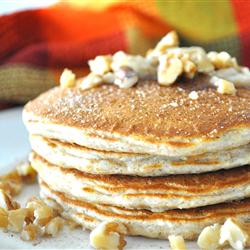
Ingredients

  • 1 1/2 cups old-fashioned oatmeal
  • 1 1/2 cups whole wheat flour
  • 2 teaspoons baking soda
  • 1 teaspoon baking powder
  • 1/2 teaspoon salt
  • 1 1/2 cups buttermilk
  • 1 cup milk
  • 1/4 cup vegetable oil
  • 1 egg
  • 1/3 cup sugar
  • 3 tablespoons chopped walnuts (optional)

Directions

  1. Grind the oats in a blender or food processor until fine. In a large bowl, combine ground oats, whole wheat flour, baking soda, baking powder, and salt.
  2. In another bowl, combine buttermilk, milk, oil, egg, and sugar with an electric mixer until smooth. Mix wet ingredients into dry with a few swift strokes. Stir in nuts, if desired.
  3. Lightly oil a skillet or griddle, and preheat it to medium heat. Ladle 1/3 cup of the batter onto the hot skillet; cook the pancakes for 2 to 4 minutes per side, or until brown.
  4. Serve with warm maple syrup.  Yum! 
Amount Per Serving  Calories: 383 | Total Fat: 12.5g (Because of nuts - but it's GOOD fat!)| Fiber: 6g| Cholesterol: 41mg

Fresh Veggie Bagel Sandwich
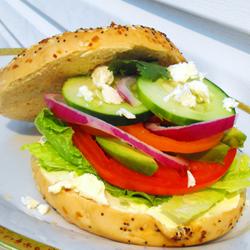
Ingredients

  • 1 bagel, sliced in half (I use the 100 calorie bagel "thins" to cut back on calories)
  • 1 wedge of Laughing Cow Cheese (I use Garlic & Herb but any will do)
  • 1 leaf romaine lettuce
  • 2 (1/4 inch thick) rings green bell pepper
  • 4 slices cucumber
  • 2 slices tomato
  • 2 slices of avocado
  • salt and freshly ground black pepper to taste
  • 2 slices red onion
  • 1/2 cup alfalfa sprouts (optional)

Directions

  1. Spread cheese onto the cut sides of the bagel. Layer the lettuce, green pepper, cucumber, avocado and tomato on one half. Season the tomato with salt and pepper. Top with onion and alfalfa sprouts (if you choose), then cover with the other half of the bagel.   Serves 1.

Nutritional Information 

Amount Per Serving  Calories: 331 (or 210 w/Bagel 'thin') | Total Fat: 2.9g | Fiber: 6g | Cholesterol: 0mg

Pasta Primavera w/ Smoke Gouda

Ingredients

  • 1 (16 ounce) package whole wheat penne pasta
  • 2 tablespoons olive oil
  • 2 zucchinis, diced
  • 1 green bell pepper, diced
  • 2 carrots, diced
  • 1 (8 ounce) package mushrooms, sliced
  • 3 onions, diced
  • 3 cloves garlic, minced
  • 1 (14.5 ounce) can stewed tomatoes, coarsely chopped
  • 1 cup low-sodium vegetable broth
  • 2 tablespoons chopped fresh parsley
  • 1/2 teaspoon dried basil
  • 1/2 teaspoon dried oregano
  • 1/2 teaspoon red pepper flakes (optional for those who like a kick :)
  • 2 tablespoons grated Parmesan cheese
  • 2/3 cup shredded smoked Gouda cheese

Directions

  1. Fill a large pot with lightly salted water and bring to a rolling boil over high heat. Once the water is boiling, stir in the penne, and return to a boil. Cook the pasta uncovered, stirring occasionally, until the pasta has cooked through, but is still firm to the bite, about 11 minutes. Drain well in a colander set in the sink.
  2. Heat the olive oil in a skillet over medium heat. Stir in the zucchini, bell pepper, carrots, mushrooms, and onion; cook and stir until the onion has softened and turned translucent, about 5 minutes. Add the garlic and cook for one minute more. Stir in the tomatoes, vegetable broth, parsley, basil, oregano, and red pepper flakes (optional). Bring to a boil, then reduce heat to low and simmer until sauce thickens. Stir in the pasta and cook until heated through, about 2 minutes. Top with Parmesan and Gouda cheeses before serving. 

Nutritional Information 

Amount Per Serving  Calories: 322 | Total Fat: 7.8g | Fiber: 10.1g | Cholesterol: 13mg

Wednesday, November 17, 2010

Vegan Jambalaya

Jambalaya is Louisiana’s version of paella.  Traditionally it is made of three parts (meats, vegetables and rice) cooked in stock.  Most often chicken and andouille sausage are used for the meat, though I’ve always preferred Jambalaya made with veggies to its meatier counterparts.  In parts of central Louisiana it’s not uncommon to find the dish made with crawfish, oyster, turtle or alligator.

Cajun and Creole recipes vary from each other in terms of included vegetables.  Cajun Jambalaya uses onion, celery and green bell pepper.  The smoky flavor and brown coloration are a result of sausage cooked in a cast iron pan.  However, the more traditional Creole version, which uses onions, peppers and tomatoes is the one I prefer and, for reasons you can deduce, is more easily adapted to a vegetarian entree.

The wonderful thing about Jambalaya is that is universally a one dish wonder – filling, but quick and easy to make.  What’s more, it’s affordable, calling for a handful of vegetables, rice and dried spices most likely already in your cupboard.  The version detailed below uses summer squash and zucchini, though I have plans to experiment with the addition of vegan sausage.  (I’d love to know if you’ve tried this.)

Enjoy and, as they say in the Crescent City, laissez les bon temps rouler!

Vegetarian Jambalaya 
This make-ahead main or side dish has all the flavor and boldness of traditional jambalaya. If there's any left over, roll it up in a flour tortilla and add your favorite topping!!  Yum!! 
Ingredients
  • 1 medium onion, finely chopped
  • 1 cup chopped celery
  • 1 cup chopped green pepper
  • 1 cup sliced fresh mushrooms
  • 1 zucchini
  • 2 garlic cloves, minced
  • 1 teaspoon olive oil
  • 3 cups chopped fresh tomatoes
  • 2 cups water
  • 1 cup uncooked long grain rice
  • 2 tablespoons reduced-sodium soy sauce
  • 1 tablespoon minced fresh parsley
  • 1/4 teaspoon salt
  • 1/4 teaspoon paprika
  • 1/8 teaspoon cayenne pepper
  • 1/8 teaspoon chili powder
  • 1/8 teaspoon pepper
  • 6 tablespoons reduced fat sour cream (omit if you're going the vegan route)

Directions

  1. In a large nonstick skillet, saute the onion, celery, green pepper, mushrooms, zucchini and garlic in oil until tender. Stir in the tomatoes, water, rice, soy sauce, parsley, salt, paprika, cayenne, chili powder and pepper.
  2. Transfer to a 2-1/2-qt. baking dish coated with nonstick cooking spray. Cover and bake at 350 degrees F for 65-70 minutes or until rice is tender and liquid is absorbed. Top each serving with 1 tablespoon sour cream.
Nutrition Facts: One serving (1 cup) equals 187 calories, 3 g fat (1 g saturated fat), 5 mg cholesterol, 339 mg sodium, 36 g carbohydrate, 3 g fiber, 5 g protein. Diabetic Exchanges: 2 vegetable, 1-1/2 starch, 1/2 fat.

Friday, October 22, 2010

Vegetarian Shepherd's Pie

COMFORT FOOD!!  Here's an amazing recipe that is a delicious, savory, meatless meal that will stick to your ribs.  The "Boca" crumbles in the dish would fool even the most devoted carnivore!  Perfect for the fall/winter weather headed our way!!

Vegetarian Shepherd's Pie

Ingredients

  • 8 large potatoes, peeled and quartered
  • 2 carrots, sliced
  • 1 (16 ounce) package frozen mixed vegetables, thawed
  • 1 package meat substitute crumbles (like Boca)
  • 1/2 teaspoon garlic powder
  • 1/2 teaspoon dried basil
  • 1/2 teaspoon dried parsley
  • 3 tablespoons butter
  • 1/4 teaspoon salt
  • 1/4 teaspoon ground black pepper
  • 6 tablespoons milk
  • 1 onion, chopped
  • 1 teaspoon vegetable oil
  • 1 (19 ounce) can kidney beans, drained
  • 1 (14.5 ounce) can diced tomatoes, drained
  • 1 (8 ounce) can tomato sauce
  • 1 teaspoon soy sauce
  • 1/2 teaspoon white sugar
  • 1 cup shredded Cheddar cheese
  • 1/2 teaspoon paprika

Directions

  1. Preheat oven to 375 degrees F (175 degrees C).
  2. Cook potatoes, covered, in a small amount of boiling water until tender. Drain and mash.
  3. While potatoes are cooking, steam or boil carrots and mixed vegetables until near tender. Drain and set aside.
  4. In a small saucepan, cook garlic powder, basil and parsley in butter or margarine for about 20 seconds (or microwave for 10 seconds). Stir into mashed potatoes along with salt and pepper. Gradually beat in enough milk to make potatoes light and fluffy, add a little more milk if necessary. Set aside
  5. In a medium saucepan, cook onion in oil until tender but not brown. Stir in boca crumbles, kidney beans, tomatoes, tomato sauce, soy sauce, sugar and vegetable/carrot mixture. Heat through until bubbly.
  6. Transfer vegetable mixture to a 8x8x2 inch baking dish. Drop mashed potatoes in mounds over the top. Sprinkle with cheese and paprika. Bake, uncovered at 375 degrees F (175 degrees C) for 30 minutes. 
NUTRITION INFO:  Amount Per Serving  (serves 6) Calories: 386 | Total Fat: 8.4g | Fiber: 21.4g | Cholesterol: 36mg

Wednesday, October 20, 2010

What your body does within 1 hour of drinking soda......

In my current quest to become a Certified Nutritionist I've become even  more aware of our world of food and drink.  I want to know what happens IN our bodies once we consume something as well as how the item being consumed is made.  So in my constant search for a healthier lifestyle for my family and I, I started looking into the expansive world of soda.  While my kids don't drink it (in fact, the one time my daughter tried it, she thought it was disgusting and spicy.......) My partner and I do on occasion. Now, everyone knows what soda is, right??  A soft drink (also referred to as soda, pop, soda pop or fizzy drink) is a non-alcoholic beverage typically containing water and a flavoring agent. Many are carbonated and sweetened, and may contain additional ingredients such as fruit juice. Small amounts of alcohol may be present, but the level would generally remain under 0.5% of the total volume for the drink to be considered non-alcoholic. Soft drinks are most often consumed chilled, and sometimes at room temperature.


I've always wondered why soda is called a "soft drink."   Wikepedia explains that "The adjective "soft" is employed in opposition to "hard", the latter being used in reference to drinks with a high alcohol content. Further, soft drinks are not thought of as containing milk or other dairy products."  Many carbonated soft drinks sweetened with sugar or high fructose corn syrup and are available in diet versions sweetened instead with non-caloric sweeteners.

Now don't get me wrong, I do enjoy pop.  But I also feel like if it's regular, NON-diet soda it's like fat-building-crack-in-a-can and if it's DIET, it's cancer-in-a-can.  So as good as it may be in all of its deliciousness, I think it's time to give it the boot.    

According to the Nutrition Research Center, this is what happens to your body within 1 hour of drinking a can of soda:
 -10 minutes: 10 teaspoons of sugar hit your system, which is 100 percent of your recommended daily intake. You’d normally vomit from such an intake, but the phosphoric acid cuts the flavor.
-20 minutes: Your blood sugar skyrockets. Your liver attempts to maximize insulin production in order to turn high levels of sugar into fat.
-40 minutes: As your body finishes absorbing the caffeine, your pupils dilate, your blood pressure rises, and your liver pumps more sugar into the bloodstream. Adenosine receptors in your brain are blocked preventing you from feeling how tired you may actually be.
 -45 minutes: Your body increases dopamine production, causing you to feel pleasure and adding to the addictiveness of the beverage. This physical neuro response works the same way as it would if we were consuming heroin.
>60 minutes: The phosphoric acid binds calcium, magnesium and zinc in your lower intestine, which boosts your metabolism a bit further. High doses of sugar and artificial sweeteners compound this effect, increasing the urinary excretion of calcium. The caffeine’s diuretic properties come into play. (You have to GO!) Your body will eliminate the bonded calcium, magnesium and zinc that was otherwise heading to your bones. And you will also flush out the sodium, electrolytes and water. Your body has eliminated the water that was in the soda. And in the process it was infused with nutrients and minerals your body would have otherwise used to hydrate your system or build body cells, bones, teeth.
-60 minutes: The sugar crash begins. You may become irritable and/or sluggish. You start feeling like crap.

Time to grab another?

Wednesday, September 22, 2010

The "Eggsperience"

So I've done a lot of research into the wonderful world of EGGS.  While I hardly eat them (I really only use them in baking......) I can't seem to cut them completely out of my life.  It's quite possible that I'm just not trying hard enough as there are many alternatives.  And while I do feel guilty every time I crack an egg open,   I rationalize to myself that they're "free-range" or "cage free."  I'm here to inform you that there is a BIG distinction between the two.

I've had a few people proudly tell me that they only buy cage-free eggs and free-range poultry.  After all of the info I've found, I'm interested to hear what people say they think these terms mean.  As I expected, all of them had images in their heads of green pastures, with plump, clucking chickens running about, and big, red barns in the back drop. Okay, so no one described the barn, I just thought it fit with the images they'd created. Anyway, after realizing the knowledge deficit that exists surrounding the definition of the terms free-range and cage-free, I decided to devote this entry to dispelling the myth behind them. A myth, perpetuated by the meat industry, that provides consumers with a false sense of comfort regarding the care and consideration of chicken and other poultry on factory farms. 
 
Let me begin by citing the USDA's definition of the terms. First, there is no legal definition for the term "cage-free." The USDA has no regulatory policy regarding cage-free eggs. Usually, cage-free eggs are ones that come from hens that, instead of being kept in overcrowded cages, are housed in large overcrowded sheds. Typically, there are so many birds packed in one of these sheds that the hens are unable to flap their wings. These birds still have their beaks cut off with a hot blade and no pain killers. They live in sheds soaked with urine and shuffle around in their own feces. Most often, sick birds are left to die because they receive no veterinary care (providing veterinary care costs the farmer more than replacing the bird does). After they've died, their corpses are left to rot in the shed alongside the egg-laying hens that provide the consumers with cage-free eggs.  

Unlike the term "cage-free," the USDA does have a requirement that must be met in order to earn the certification of "free-range." According to USDA policy, in order to be certified as free-range, birds must be raised with access to the outdoors and provided a traditional high-protein diet. The policy states that the birds may be temporarily confined for reasons of health, safety, the animal's stage of production, or to protect soil or water quality. For many free-range chickens, the access to the outdoors they receive is when they are transported to the windowless chicken sheds and then again when they are removed from the shed for slaughter. The USDA offers no specifications as to how much outdoor exposure the birds must receive nor is there any way to enforce such a requirement even if it was mandated. Also, it is important to note that male chickens born on cage-free or free-range farms suffer the same fate as the ones born in the battery cages, that is, the male chickens are killed because they cannot lay eggs and are of no use to egg-producing farmers. The male chickens are usually killed in one of three ways- They are crushed to death, literally, like the way my brother used to squash aluminum cans. They are thrown in large plastic bags and suffocated to death. Or, they are thrown, still alive, into a grinder to be processed as feed. 

So what's a consumer supposed to do if he/she doesn't want to give up eggs but doesn't want to support the cruel industry of factory egg production? The best but not always possible choice?? Find a local farmer. Go see the chickens who'll provide you with your eggs. See where they're housed, what kind of physical condition they're in, if their beaks are intact or have been cut off. By the way, farmers trim the beaks of chickens because when kept in such unnaturally close quarters, the chickens will peck each other to death. If you visit a farm and the chickens have had their beaks trimmed, go somewhere else. 

The next best thing is to try to buy eggs from a farmers market.  If that's not possible then switch from commercially raised eggs to buying those labeled "Certified Humane," "American Humane Certified," or "Animal Welfare Approved." This means your eggs came from chickens raised with care, not confined to battery cages and stuffed with weird growth hormones or antibiotics. And these three designations are verified and monitored by animal rights organizations. In other words, they have some oomph behind them, unlike popular claims like "cage-free," which does not.

Most importantly, do your own research. The facts are out there, you just have to want to find them - I know I did!!!  I guess that would make me an "Eggspert??" ;-)